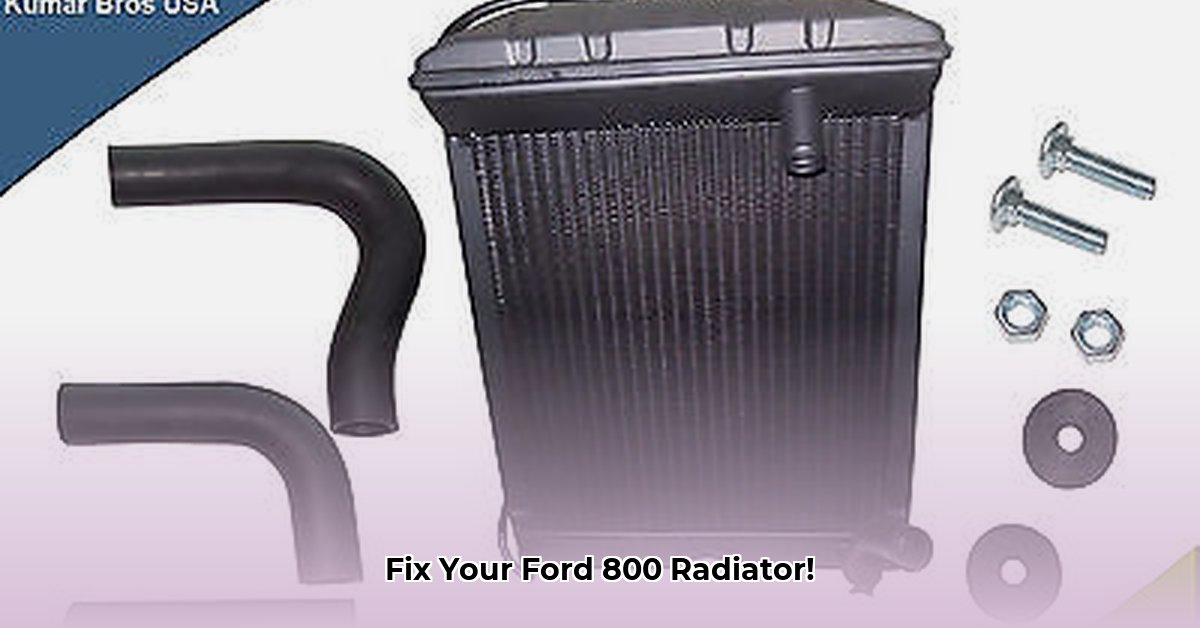
Keeping your Ford 800 tractor running smoothly depends heavily on its cooling system, with the radiator playing a crucial role. This comprehensive guide will walk you through identifying problems, sourcing replacement parts (the part numbers can be tricky!), and performing the repair—all explained in clear, straightforward language. For more information on Ford tractor paint codes, check out this helpful resource: Ford Tractor Paint.
Identifying Problems with Your Ford 800 Tractor Radiator
Your Ford 800's radiator, frequently identified by part number C5NN8005AB or its equivalent NCA8005C, is vital across numerous Ford and New Holland models (500 to 900 series and beyond). It circulates coolant, preventing engine overheating. Warning signs include persistent overheating (even with the fan engaged), visible coolant leaks, or a rusty, sludgy residue near the radiator's base. Low coolant levels are another significant red flag. A visual inspection for cracks, corrosion, or leaks is the first critical step. Have you noticed any unusual noises coming from the radiator area? That's another potential indicator of a problem.
Diagnosing Your Radiator's Issues: Beyond the Obvious
Before concluding radiator replacement is necessary, let's troubleshoot. Consistent overheating, even after checking the thermostat and fan, suggests a broader cooling system issue. While leaks around the radiator itself strongly indicate replacement, other components like hoses or sensors can also cause problems. Checking these first could save time and money. A comprehensive inspection is crucial for an accurate diagnosis. What are the most common mistakes people make when diagnosing these issues? Often, overlooking simple things like loose hose clamps or a failing thermostat can lead to unnecessary radiator replacement.
Sourcing a Replacement Radiator: Navigating the Market
Finding a replacement radiator for your Ford 800 can be challenging. These parts are often older, impacting availability. Prices range substantially—from a few hundred dollars to significantly more—depending on the supplier and its location. The weight and size of the radiator add to shipping costs. Searching online retailers specializing in older agricultural equipment parts, or contacting local parts suppliers experienced with classic tractors, is recommended. Do you prefer buying from established suppliers or exploring less-known options? It's a worthwhile trade-off to consider. Prioritize suppliers with positive customer reviews highlighting reliability and accurate descriptions.
Replacing Your Ford 800 Radiator: A Step-by-Step Guide
Replacing a tractor radiator isn't a quick task; it requires mechanical knowledge and the right tools. Here’s a simplified guide:
Step 1: Preparation (Crucial!)
- Completely drain the radiator's coolant into a suitable container. Coolant is corrosive; wear gloves and eye protection.
- Gather tools: wrenches (various sizes), sockets, screwdrivers, and your new radiator.
Step 2: Radiator Removal
- Carefully disconnect all coolant hoses. A helper can assist with supporting the radiator's weight.
- Remove the radiator's mounting bolts using the appropriate wrenches. Proceed cautiously to avoid damage.
Step 3: Installation – Fitting the New Radiator
- Gently position the new radiator, ensuring correct alignment with its mounting points.
- Secure the radiator using the mounting bolts. Tighten them evenly to prevent leaks or damage.
Step 4: Reassembly and Refilling
- Reconnect the coolant hoses securely, ensuring airtight connections to prevent leaks.
- Refill the cooling system with the correct coolant type and amount (refer to your tractor's manual).
- Bleed the air from the system to ensure proper coolant flow and prevent overheating. Consult your owner's manual for specific instructions.
Important Safety Precaution: Coolant is hazardous; always wear protective gear when handling it. Work in a well-ventilated area; avoid skin or eye contact. Did you know that improper coolant handling can lead to serious health issues, including skin irritation and respiratory problems?
Preventative Maintenance: Extending Radiator Lifespan
Regular maintenance significantly extends radiator lifespan. Regularly inspect for leaks, monitor coolant levels, and flush the cooling system periodically (frequency dependent on usage and local conditions). These preventative steps are significantly less costly than a full replacement. How often do you recommend flushing the cooling system? Annual flushing is generally recommended for optimal performance and longevity.
Long-Term Strategies: Planning Ahead
Obtaining parts for older tractors can be challenging. Consider these long-term solutions:
- Purchase spares: Having a spare radiator prevents future disruptions.
- Custom fabrication: If parts become unavailable, a machine shop might fabricate a custom radiator (a more expensive but potentially worthwhile option).
- Alternative cooling solutions: Explore advanced cooling system upgrades if persistent parts issues are anticipated. What are some examples of alternative cooling solutions? Improved radiator designs or even advanced liquid cooling systems could be considered.
Share Your Experience!
Have you tackled a Ford 800 radiator repair? Share your advice and experiences in the comments below! Your insights can help other tractor owners.